
I still remember the first time I stumbled into a hidden area in a game and realized the developers had built an entire story there that most players would never see.
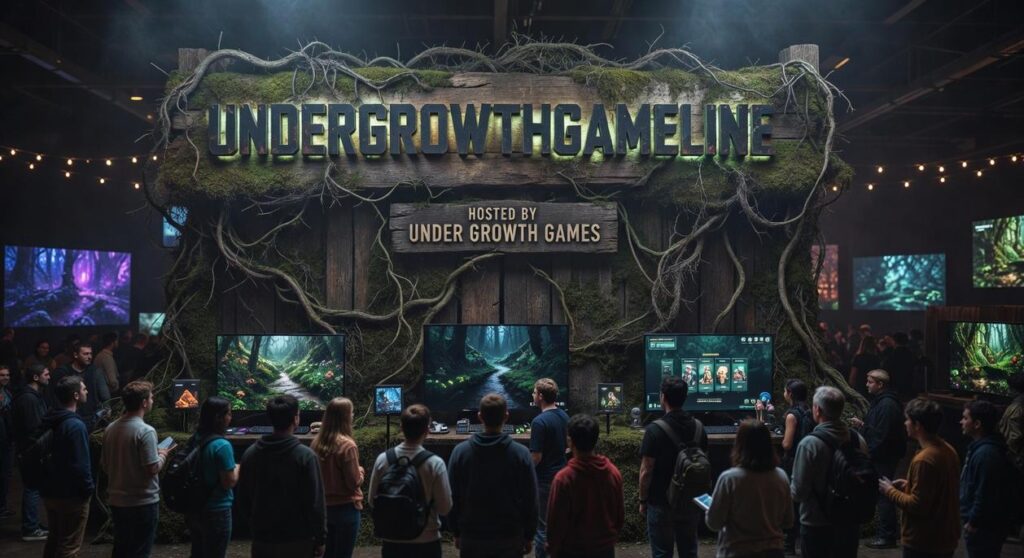
That’s the feeling undergrowthgameline hosted by under growth games captures in every title they release.
You’re probably tired of open world games that give you a massive map with nothing interesting to do. Or quest markers that just send you back and forth picking up items. I’ve played through too many of those myself.
Here’s what makes this series different: the world tells you stories without spelling everything out. You find a rusted sword stuck in a tree and have to piece together why it’s there. You follow a trail of strange symbols and discover something that changes how you see the entire game.
I’ve spent hundreds of hours exploring these games and talking to players who’ve found secrets I completely missed. That’s the kind of depth we’re dealing with here.
This article breaks down what makes undergrowthgameline hosted by under growth games stand out from everything else in your library. I’ll show you how the environmental storytelling works, why the quest design feels different, and which game you should start with based on what you’re looking for.
By the end, you’ll know exactly why this series has become a benchmark for what interactive storytelling can be.
And you’ll know which title to download first.
What Defines The Undergrowth Game Line? The Core Pillars
Most games tell you a story.
Undergrowth Game Line makes you find it.
That’s the difference. And once you understand that, everything else clicks into place.
I’ve been covering game design for years now and I keep coming back to this series. Not because it’s perfect. But because it does something most studios won’t even attempt.
It trusts you.
The World Is The Main Character
Here’s what I mean by environmental narrative. You walk into a ruined temple and there’s no cutscene explaining what happened. Instead, you notice the claw marks on the walls. The scattered belongings near the exit. The way vines have grown through specific doorways but not others.
You piece it together yourself.
Some critics say this approach alienates casual players. That not everyone wants to work that hard for their story. Fair point. But I think they’re missing something bigger.
When you discover lore through exploration rather than dialogue boxes, it sticks with you differently. You remember that temple because you figured it out. Not because an NPC told you about it.
Quests That Don’t Feel Like Homework
Traditional games give you a checklist. Kill ten wolves. Collect five herbs. Return to quest giver.
The undergrowthgameline hosted by Under Growth Games flips this completely.
You might overhear a conversation about a missing caravan. No quest marker appears. No objective list pops up. But if you’re paying attention and you happen to explore that canyon you’ve been curious about? You’ll find what’s left of it.
The reward isn’t experience points or loot (though those exist). The reward is knowing you found something most players will miss.
I’m betting this design philosophy becomes more common in the next few years. Players are getting tired of being led around by the nose. They want to feel smart again.
When Art and Sound Become Atmosphere
Walk through a dense forest in any Undergrowth title and you’ll notice something.
The art style isn’t trying to be photorealistic. The colors are slightly muted. Shadows pool in specific ways. And the sound design? It’s doing half the work.
Distant bird calls that change based on time of day. Wind that rustles different types of foliage differently. The crunch of leaves that tells you what season it is.
This is where the series really separates itself. Every location feels like a place that exists whether you’re there or not. The sprawling caverns have their own ecosystem. The abandoned villages have their own history.
It’s cohesive in a way most games aren’t.
My guess? We’ll see more studios try to replicate this approach. But here’s the thing about atmosphere. You can’t fake it with better graphics or a bigger budget. It requires restraint and intention at every level.
That’s harder than it sounds.
The Gameplay Loop: How Exploration and Quests Intertwine
Most games hold your hand.
They give you a glowing marker. A minimap dot. A quest arrow that says “go here, do this.”
But what if you had to actually EXPLORE?
I’m talking about the kind of exploration where you find a crumbling stone arch and wonder what it means. Where you notice moss growing in strange patterns and realize it’s pointing you somewhere.
That’s what we’re seeing in games covered by undergrowthgameline hosted by under growth games.
Here’s what you get from this approach.
You feel smart when you solve things. Instead of following instructions, you’re piecing together clues. Reading your journal. Connecting dots that the game trusts you to connect.
Take this example. You find a light-crystal in an abandoned temple. The game doesn’t tell you what it does. But when you hold it near certain walls, ancient pathways start to glow. Suddenly you’re not just walking through a dungeon. You’re DISCOVERING it.
The quests work the same way.
Say a village elder mentions their water source is corrupted. You could fight your way to the source and cleanse it with magic. Or you could track the corruption upstream and find the real problem. Or maybe you convince a local alchemist to create a filtration system instead.
Three different solutions. Three different skill sets. No wrong answer.
And here’s the part that matters most.
When you fix that water source? The village changes. NPCs mention it. New shops open. Kids play near the well again.
Your choices stick. The world remembers what you did.
That’s player agency that actually means something.
Spotlight: Key Titles in The Undergrowth Game Line
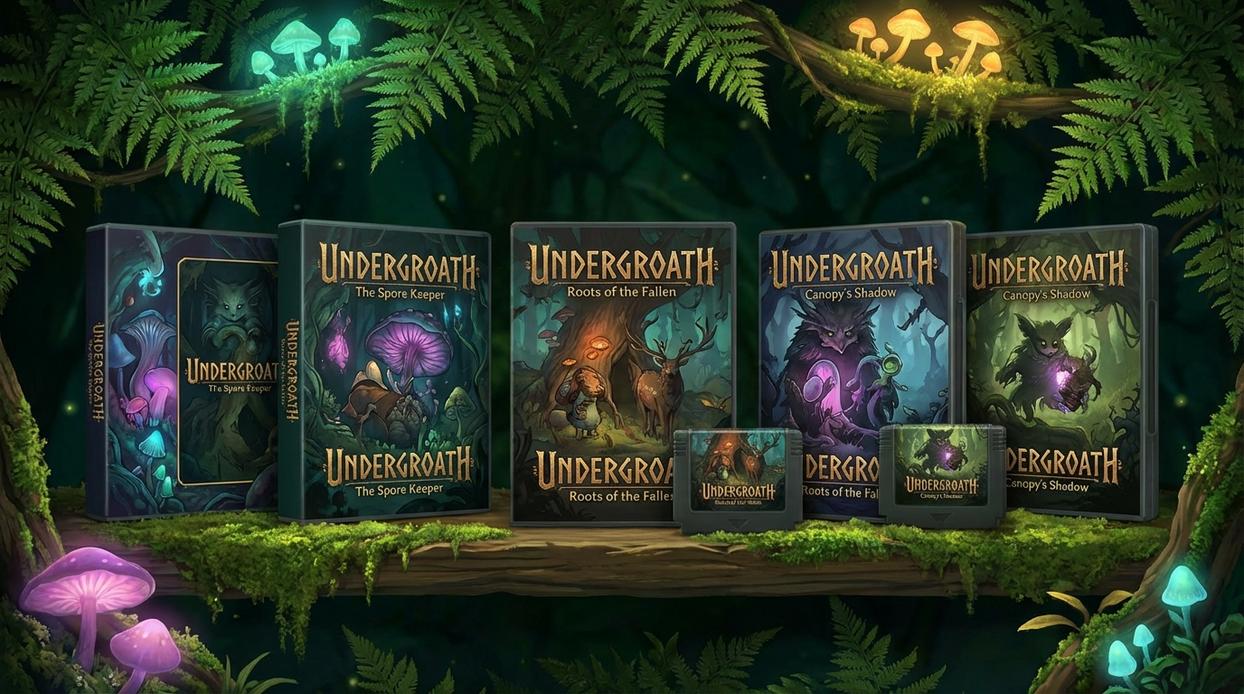
The Undergrowth Game Line can feel overwhelming at first.
Three different games. Three different approaches. And if you’re new to the series, you probably don’t know where to start.
Let me break it down.
For the Story-Seeker: Whispering Roots
This is the one you want if you care about narrative.
Whispering Roots puts story front and center. You’re not just exploring underground spaces. You’re living through a personal journey that actually means something.
The dialogue system here is what sets it apart. Your choices shape relationships in ways that feel real (not just good ending versus bad ending). Characters remember what you said three hours ago and bring it up later.
Critics loved the character development. I did too. It’s rare to find a game where NPCs feel like actual people instead of quest dispensers.
For the Explorer: Glimmerdeep Caverns
Want to get lost in a massive underground world?
Glimmerdeep Caverns is your game.
This title takes the exploration mechanics from the online game event undergrowthgameline and pushes them further than you’d expect. The cave systems connect in ways that reward curiosity. You’ll find shortcuts you didn’t know existed and stumble into areas that make you wonder how deep this thing actually goes.
Environmental challenges replace combat in most sections. You’re solving problems with observation and movement instead of weapons.
For the Strategist: The Sunken City
This one adds layers.
The Sunken City keeps the exploration but introduces survival and resource management on top. You’re not just finding your way through. You’re deciding what to carry, what to craft, and where to build your base.
The crafting system matters here. You can’t just hoard everything. Weight limits force you to think about what you actually need versus what might be useful later.
Base building feels purposeful too. Your camps become actual staging points for deeper expeditions instead of decoration.
Each game serves a different type of player. Pick the one that matches how you like to play.
The Future of Immersion: What’s Next from Under Growth Games?
So what’s coming next?
Under Growth Games has been quiet about their full roadmap. But whispers about Project Sky-Sail keep popping up in developer forums and community Discord servers.
The concept sounds wild. Vertical exploration instead of the usual horizontal sprawl. Think climbing through cloud layers and discovering entire ecosystems stacked on top of each other.
But here’s what really matters for players like us.
The studio is building out new tech that goes beyond what we’ve seen. Their procedural generation system is getting an overhaul. Dynamic weather that actually changes how you explore and what you find (not just visual effects that look pretty but do nothing).
You’re probably wondering if this means their next games will feel completely different.
Not exactly. The core pillars stay the same. Immersion and discovery aren’t going anywhere. They’re just finding new ways to deliver those experiences.
I’ve been following their undergrowthgameline our hosted event coverage and the tech demos they’ve shown off. The weather systems alone could change how we approach exploration games.
Rain that floods lower areas and forces you upward. Wind patterns that open new flight paths but close others.
These aren’t just features. They’re systems that make you rethink your entire approach to moving through game worlds.
Your Next Great Adventure Awaits
I built undergrowthgameline hosted by undergrowth games because I was tired of empty open worlds.
You know the feeling. You boot up a game that promises freedom and discovery. Instead you get a checklist simulator with copy-pasted content scattered across a lifeless map.
These games are different.
undergrowthgameline hosted by undergrowth games focuses on deep immersion and real discovery. Every location matters. Every choice counts.
We handcraft experiences that respect your intelligence. You won’t find busywork here. Just worlds that reward your curiosity and stories that stick with you long after the credits roll.
If you crave a rich story that unfolds naturally, start with Whispering Roots today. For those who want exploration that feels genuine, try Canopy Unknown.
These aren’t games you rush through. They’re adventures you remember.
Your next great experience is waiting. Pick a title and dive in.
