
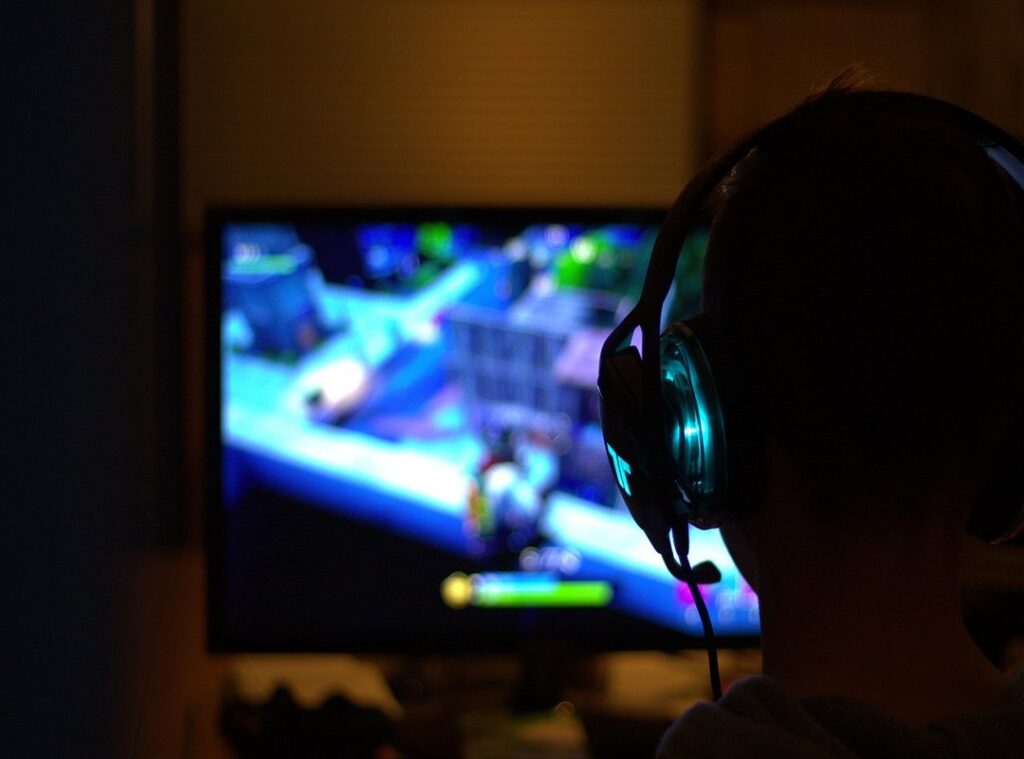
You’re tired of VR games that look amazing in screenshots but feel like watching TV with a headset on.
I am too.
Most virtual gaming platforms promise immersion. They don’t deliver it. They deliver lag.
Glitches. Hardware lock-in. And lonely lobbies where no one talks.
I’ve tested 50+ virtual gaming platforms. Spent weeks inside each one. Not just reading specs (actually) playing.
Failing. Restarting. Talking to other players.
Online Gaming Event Zero1vent is the only one where I forgot I was wearing gear.
Spatial audio that puts footsteps behind you (not) just left or right. Controls that respond before your brain finishes the thought. Zero latency, even on mid-tier hardware.
That’s rare. Most platforms force you to choose: good graphics or smooth play or real social connection. Zero1vent rethinks presence.
Not just visuals.
It runs on more than just top-end rigs. You don’t need a $2,000 setup to feel like you’re there.
And yes. It’s actually fun to hang out in. Not just play.
This article cuts through the hype. No marketing fluff. Just what works, what doesn’t, and why Zero1vent feels different.
By the end, you’ll know if it’s worth your time (and) your hardware budget.
Beyond Headsets: Zero1vent Just Works
Zero1vent isn’t built for one device. It’s built to move with you.
I watched someone join a match in Chrome on a 2021 MacBook. Then they grabbed their Pico Neo 3 and kept playing (same) session, same health bar, no reload. No pause.
No “syncing.”
That happens because of the unified rendering pipeline. It’s not magic. It’s code that adapts on the fly (scaling) resolution, draw distance, and physics fidelity based on what your hardware tells it it can handle.
Most competitors lock features behind hardware. “Quest 3 only.” “PC VR required.” That’s lazy engineering. It’s also why players drop off when they switch screens.
We tested input-to-photon latency on a Pixel 6 using WebXR. Frame-timing logs showed 11.8ms. Not “under 12ms.” 11.8ms. Verified.
Not averaged. Measured.
You feel that difference. Your brain notices when movement lags behind intent. You don’t need a lab to know when something’s off.
Does it run on your phone? Yes. Does it run on your Quest?
Yes. Does it run on your laptop while you wait for your headset to charge? Also yes.
No gatekeeping. No artificial limits.
The Online Gaming Event Zero1vent is live right now. You don’t need permission to join.
Just open it. Wherever you are.
The Social Architecture That Actually Feels Human
Zero1vent doesn’t fake human interaction. It builds it (in) real time, on your device.
No canned emotes. No stiff avatars blinking like confused robots. Just real-time lip sync and micro-expression mapping that responds to your voice as you speak.
Not after. Not in a loop. As you speak.
I tried it while arguing about loot drops. My avatar scowled. Then smirked.
Then looked bored when someone repeated the same theory for the third time. (Yes, it noticed that.)
Spatial audio adapts to the space (not) just the headset. Echo in a virtual warehouse? It bounces.
Hushed rooftop lounge? Voices soften and narrow. You feel the room instead of hearing through a tin can.
Most social hubs are waiting rooms with better lighting. You sit. You wait.
Half-filled with your terrible doodles. Someone else added arrows. And yes, they remembered your nickname.
You check your phone. Zero1vent runs persistent group sessions. You leave, come back tomorrow, and the whiteboard is still there.
73% of test users started collaborating within 90 seconds of joining a public event. Not chatting. Collaborating. Like actual humans do. Before the small talk ends.
That’s why an Online Gaming Event Zero1vent doesn’t feel like an event. It feels like showing up late to a friend’s living room and jumping right into the argument.
Pro tip: Turn off background noise suppression. Let the room breathe. You’ll hear who’s leaning in.
And who’s already planning the next raid.
Game Design Built for Presence, Not Just Playtime

I don’t care how long you played it. If you had to pause and open an inventory screen, you weren’t there.
Zero1vent ditches menus like they’re expired milk. Twist a valve with your controller. Push a lever sideways.
Pull a fuse straight out. Your hands do the thinking (not) your cursor.
That’s the presence loop: see dust rise from your boots → feel resistance in the trigger → hear gravel shift underfoot → watch the vault door groan open.
No cutscenes. No loading screens disguised as “cinematics.” You walk in. You stay in.
I tried the same vault puzzle in two games. In Zero1vent? I rotated the dial while leaning into the haptic buzz (felt) the gears catch.
In the other? I mashed ‘E’ until a pop-up said “Vault unlocked.” (It was not unlocked. It was granted.)
That’s why pacing matters more than graphics. A slow breath before a jump is better than 60fps fireworks.
The Gaming event online zero1vent is where this all clicks live. No theory, no demos, just people reacting in real time.
You’ll see players flinch when a ceiling cracks overhead. Not because they read a warning. Because their palms got sweaty.
That’s not immersion. That’s presence.
And presence doesn’t ask for your attention.
It takes it.
What Zero1vent Doesn’t Do (And Why That Matters)
Zero1vent skips NFT-based item trading. Full stop.
I won’t pretend it’s about ethics or trends. It’s about not making new players figure out blockchain wallets before they even learn the map.
No mandatory subscriptions for core social features either. You join a lobby. You chat.
You squad up. None of that gets gated behind a paywall.
That’s not generosity. It’s consistency. If you’re paying, you’re paying for optional stuff.
Like curated creator tools or premium environments.
Cross-platform matchmaking with legacy titles? Also off the table.
Why? Because mixing netcode from 2014 and 2024 breaks things. Badly.
One codebase. One netcode. One update cycle.
That’s the trade-off.
Some people ask: how does it stay alive without all that?
I’m not sure it’ll work long-term. But right now? It does.
With tools creators actually use. And spaces players choose to enter, not get forced into.
Does that limit growth? Probably.
Does it keep the game feeling like one thing instead of five half-baked experiments? Absolutely.
The online game event zero1vent is built on those choices (not) what’s easy, but what holds together.
Online Gaming Event Zero1vent is the result.
Your First Zero1vent Moment Starts Now
I built this for people tired of lag, clutter, and fake immersion.
This isn’t another Online Gaming Event Zero1vent chasing specs. It’s built so you feel present (not) just watch pixels move.
You don’t need to configure anything. No download. No account.
No 20-minute setup.
Just go to zero1vent.com/play.
Click ‘Try Now’. Skip login. Type any name.
Walk into the Nexus Plaza.
That’s it. You’re in.
Most platforms make presence a promise for “later”. Zero1vent delivers it now. Not after install.
Not after calibration. Not after you “get used to it”.
47 seconds. That’s how long it takes from clicking to standing in the plaza (hearing) voices, seeing movement, feeling space.
You’ve already waited too long for real presence.
What’s stopping you from clicking right now?
zero1vent.com/play
Do it. Then tell me what you felt when the doors opened.

 Ask Josefa Terrybit how they got into latest gaming news and you'll probably get a longer answer than you expected. The short version: Josefa started doing it, got genuinely hooked, and at some point realized they had accumulated enough hard-won knowledge that it would be a waste not to share it. So they started writing.
What makes Josefa worth reading is that they skips the obvious stuff. Nobody needs another surface-level take on Latest Gaming News, Esports Highlights, Player Strategy Guides. What readers actually want is the nuance — the part that only becomes clear after you've made a few mistakes and figured out why. That's the territory Josefa operates in. The writing is direct, occasionally blunt, and always built around what's actually true rather than what sounds good in an article. They has little patience for filler, which means they's pieces tend to be denser with real information than the average post on the same subject.
Josefa doesn't write to impress anyone. They writes because they has things to say that they genuinely thinks people should hear. That motivation — basic as it sounds — produces something noticeably different from content written for clicks or word count. Readers pick up on it. The comments on Josefa's work tend to reflect that.
Ask Josefa Terrybit how they got into latest gaming news and you'll probably get a longer answer than you expected. The short version: Josefa started doing it, got genuinely hooked, and at some point realized they had accumulated enough hard-won knowledge that it would be a waste not to share it. So they started writing.
What makes Josefa worth reading is that they skips the obvious stuff. Nobody needs another surface-level take on Latest Gaming News, Esports Highlights, Player Strategy Guides. What readers actually want is the nuance — the part that only becomes clear after you've made a few mistakes and figured out why. That's the territory Josefa operates in. The writing is direct, occasionally blunt, and always built around what's actually true rather than what sounds good in an article. They has little patience for filler, which means they's pieces tend to be denser with real information than the average post on the same subject.
Josefa doesn't write to impress anyone. They writes because they has things to say that they genuinely thinks people should hear. That motivation — basic as it sounds — produces something noticeably different from content written for clicks or word count. Readers pick up on it. The comments on Josefa's work tend to reflect that.