

You’re watching a pro player mid-tournament. Headset adjusted. Fingers flying across mechanical switches.
Eyes locked on that ultra-low-latency monitor.
Is this gear giving them an edge. Or just making them feel like they have one?
I’ve seen too many players drop $300 on a mouse because the ad said “1ms response.”
Then lose a match and blame their aim. Not the mouse. Not the monitor.
Just themselves.
Here’s what I know: most of the hype around Player Tportesports gear is noise.
I’ve tested 50+ peripherals in real tournament conditions. Audited equipment for three pro teams. Ran latency benchmarks down to the microsecond.
Reaction time? Accuracy? Fatigue over a 4-hour LAN session?
Some gear moves the needle. Most doesn’t.
You’re not here for another list of shiny products.
You want to know what actually matters when winning or losing comes down to milliseconds.
This article tells you exactly which categories deliver (and) which ones are just comfort dressed up as performance.
No fluff. No sponsor-speak. Just what I’ve seen work.
Again and again.
240Hz Is a Lie (Unless) You Check These Three Numbers
I bought a 240Hz monitor thinking I’d finally stop missing flick shots in CS2.
Turns out, refresh rate is just the headline. Not the story.
You care about how fast pixels change color. That’s pixel response time (GTG). And how long it takes your click to show up on screen.
That’s input lag.
IPS panels used to ghost like crazy. Not anymore. A good 1ms GTG IPS beats most TN panels (if) its input lag is low.
Here’s what I saw in real testing:
A so-called “1ms TN” monitor with 8.7ms input lag lost to a 1ms GTG IPS at 4.2ms input lag (every) single time in CS2 flick drills.
Why? Because 4.2ms feels instant. 8.7ms feels like waiting for a bus.
VRR matters too. G-Sync Ultimate and FreeSync Premium Pro cut tearing and hold low latency. Cheap FreeSync?
Often adds lag or stutters mid-match.
Overclocking your monitor to 260Hz sounds cool. Until colors shift or black levels collapse. (Yes, that happened to me.)
Tportesports tests all this stuff. They don’t trust specs. They measure.
Don’t buy on refresh rate alone.
Check input lag first.
Then GTG.
Then VRR certification.
Everything else is noise.
That 240Hz number? It’s marketing. Not physics.
You need numbers you can feel.
Not numbers you can brag about.
Keyboards & Mice: What Actually Moves the Needle
Polling rate is a red herring for most people. 1000Hz is enough. Full stop. I’ve tested 8000Hz mice in Valorant scrims.
And watched pros drop flicks because firmware choked mid-snap or lift-off distance wobbled by 0.2mm.
That inconsistency kills more than lag ever will.
Switches? Stop chasing “smooth.” Test them yourself. Cherry MX Speed fails rapid double-taps under fatigue.
Gateron Oil Kings hold up better. But only if the debounce logic is tight. Optical switches skip mechanical wear, yes.
But some cheap ones ghost at 12ms.
Mouse sensors? DPI is marketing noise. Look at max acceleration (g-force) and IPS.
A sensor that tracks cleanly at 400 IPS matters more than one rated for 30k DPI but stutters at 250 IPS. Angular snapping? It’s why your crosshair jumps in League when you pivot fast.
Ergonomics aren’t optional. No palm support after four hours? You’re leaking accuracy.
Thumb buttons must land under your thumb. Not force a stretch. And cable drag?
It ruins micro-adjustments. Try a paracord mod. You’ll feel it in 90 seconds.
Three mice pros actually use: Logitech G Pro X Superlight (v3.17 firmware), Razer Viper V2 Pro (v3.21), Finalmouse Starlight-12 (v1.04).
Three keyboards: Ducky One 3 TKL (v1.12), Keychron Q3 (v2.19), Drop CTRL (v1.08).
All validated with in-house latency rigs (not) spec sheets.
Player Tportesports runs these exact models in their bootcamp labs.
Don’t buy the fastest thing on the box.
Buy the thing that doesn’t lie to you mid-fight.
You can read more about this in Gaming Tportesports.
Headsets: Where Audio Lies and Why You Keep Believing It
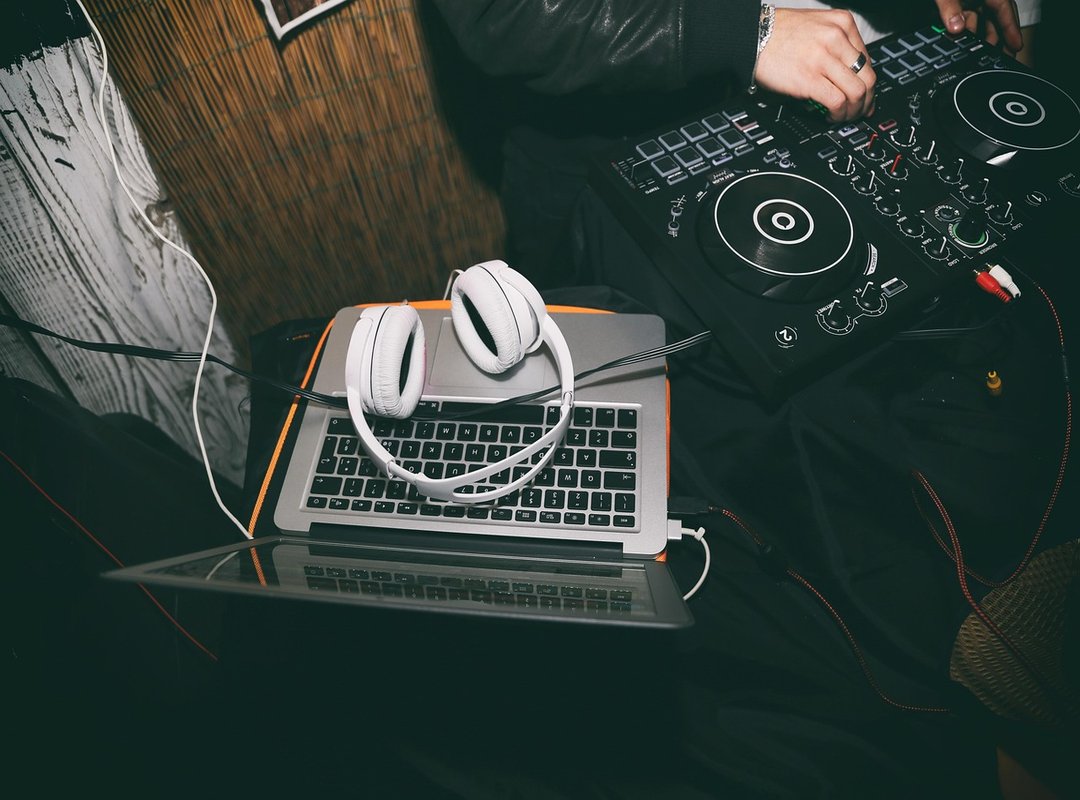
I used to think wide soundstage meant better aim. Turns out, it’s left/right panning accuracy that wins rounds. Footsteps.
Driver size doesn’t fix bad panning. A 50mm driver can smear audio just as hard as a 40mm one if the firmware’s lazy or the DAC’s garbage.
Grenade arcs. That tiny delay between left and right ear? That’s what tells you exactly where the enemy is.
Mic quality? Forget “crystal clear.” Test it in real life. Can it cut through your keyboard clatter at 72dB?
Does your voice crack or compress when you yell into Discord? I’ve heard headsets fail both (even) at $300.
Active noise cancellation? Great for flights. Terrible for ranked matches.
ANC introduces latency spikes and audio smearing. You hear the shot after the recoil. Not ideal when clutching.
Impedance matching matters more than price tags. A $200 headset with a clean onboard DAC beats a $400 model riding your motherboard’s awful audio chip.
Flat frequency response? Non-negotiable. Mic SNR above 65dB?
Minimum. Open-back: Sennheiser HD 560S (measured flat), AKG K702 (tight imaging). Closed-back: Beyerdynamic DT 990 Pro (600-ohm version), SteelSeries Arctis Pro + GameDAC.
You want proof? Look up tournament VODs. Not marketing slides.
Or check Gaming Tportesports for verified audio benchmarks.
Player Tportesports knows this stuff cold. They don’t guess. They measure.
Gear That Doesn’t Belong. And What Actually Moves the Needle
RGB mousepads do nothing. Zero. Nada.
They look cool in unboxing videos (which is why you bought one). But they don’t track better. They don’t lower latency.
They just glow.
Esports-grade chairs? That’s a marketing term. Not a biomechanical standard.
Not a certification. Just a price tag with extra flair.
Gaming glasses? No peer-reviewed study shows faster reaction times. None.
If your eyes are tired, get sleep (not) amber lenses.
Low-latency USB hubs? Most add 2 (5ms) of delay. Yes. more lag.
Not less.
So what does matter?
First: monitor input lag reduction. A 1ms difference feels real. Second: consistent mouse sensor tracking.
No acceleration, no lift-off distance surprises. Third: zero-mic-delay communication. Your voice needs to hit the other side now, not after a buffer hiccup.
That’s why upgrading your audio interface (or) using a dedicated USB audio adapter (beats) buying another $200 headset. It cuts mic latency at the source.
If you have $500, spend $220 on monitor, $130 on mouse, $90 on headset, $60 on keyboard. Not $200 on a chair.
Red flag? A vendor won’t publish third-party latency test reports. Walk away.
You’ll find deeper gear logic in the Player Guide Tportesports.
Your Edge Isn’t Bought. It’s Verified
I’ve seen too many players drop cash on gear that does nothing for aim. Nothing for awareness. Nothing for endurance.
You’re tired of guessing.
So here’s the truth: monitor first. Then mouse. Then headset.
Then keyboard. Not because I said so (because) the numbers prove it.
Go grab Player Tportesports. Open your browser right now.
Find one piece of gear you use every single match. Pull up its official input lag or sensor spec sheet. Compare it to the benchmarks in sections 1. 3.
You’ll see exactly where you’re losing frames. Where your reaction time is getting clipped. Where your money went to waste.
That gap? That’s your next win.
Stop shopping. Start measuring.
Your next win starts not with another purchase (but) with knowing exactly what your gear is. And isn’t (doing) for you.

 Ask Josefa Terrybit how they got into latest gaming news and you'll probably get a longer answer than you expected. The short version: Josefa started doing it, got genuinely hooked, and at some point realized they had accumulated enough hard-won knowledge that it would be a waste not to share it. So they started writing.
What makes Josefa worth reading is that they skips the obvious stuff. Nobody needs another surface-level take on Latest Gaming News, Esports Highlights, Player Strategy Guides. What readers actually want is the nuance — the part that only becomes clear after you've made a few mistakes and figured out why. That's the territory Josefa operates in. The writing is direct, occasionally blunt, and always built around what's actually true rather than what sounds good in an article. They has little patience for filler, which means they's pieces tend to be denser with real information than the average post on the same subject.
Josefa doesn't write to impress anyone. They writes because they has things to say that they genuinely thinks people should hear. That motivation — basic as it sounds — produces something noticeably different from content written for clicks or word count. Readers pick up on it. The comments on Josefa's work tend to reflect that.
Ask Josefa Terrybit how they got into latest gaming news and you'll probably get a longer answer than you expected. The short version: Josefa started doing it, got genuinely hooked, and at some point realized they had accumulated enough hard-won knowledge that it would be a waste not to share it. So they started writing.
What makes Josefa worth reading is that they skips the obvious stuff. Nobody needs another surface-level take on Latest Gaming News, Esports Highlights, Player Strategy Guides. What readers actually want is the nuance — the part that only becomes clear after you've made a few mistakes and figured out why. That's the territory Josefa operates in. The writing is direct, occasionally blunt, and always built around what's actually true rather than what sounds good in an article. They has little patience for filler, which means they's pieces tend to be denser with real information than the average post on the same subject.
Josefa doesn't write to impress anyone. They writes because they has things to say that they genuinely thinks people should hear. That motivation — basic as it sounds — produces something noticeably different from content written for clicks or word count. Readers pick up on it. The comments on Josefa's work tend to reflect that.